

Research and impact monitoring
Our studies provide the scientific foundation for one of Europe's largest conservation project.
Monitoring the present to safeguard the future
We rely on facts and science. To this end, we study nature and the communities of the Făgăraș Mountains using ecological, economic and sociological parameters to understand how they function and what we can do to help both nature and people.
The studies and research we conduct form the basis of all our programmes and are integrated into every activity, from conservation and community relations to infrastructure and the local economy.
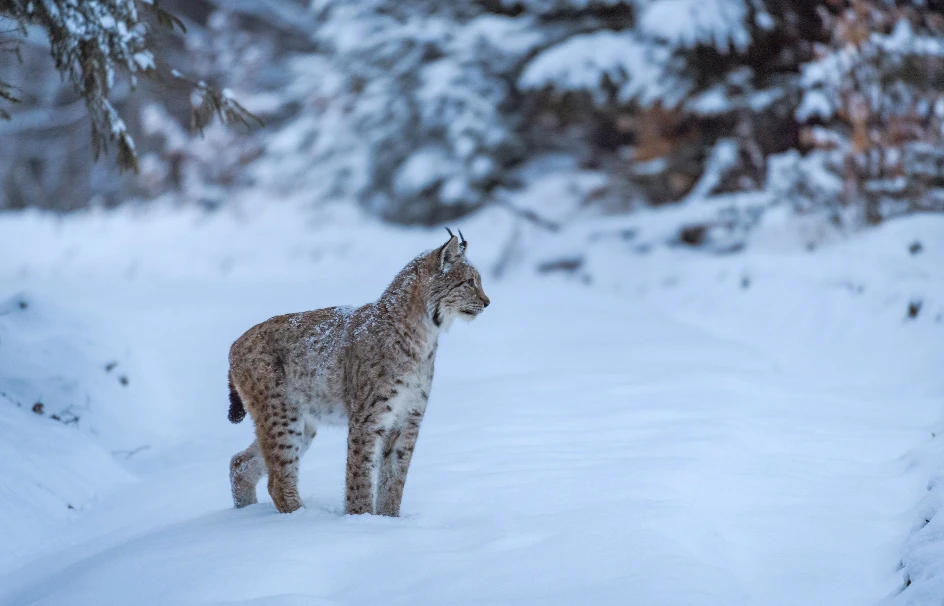
• Wildlife populations (bear, wolf, lynx, deer).
See the results of our monitoring studies.
• Reintroduced species and their impact on ecosystems (European bison, beaver, griffon vulture).
European bison monitoring
Bison grazing naturally reshapes ecosystems. Their presence helps accelerate forest regeneration, maintains a balanced network of mountain grasslands, prevents overgrazing and creates favourable habitats for numerous other species.
Beaver monitoring
The return of beavers has led to increased aquatic biodiversity and greater diversity in ecosystems along riverbanks and riparian areas. Near human settlements, we continuously monitor water levels and fallen trees, with rapid conflict-management mechanisms in place wherever necessary.
• Impact of ecological restoration activities
We monitor understorey vegetation at ground level. We track changes in plant diversity at ground level to assess how ecological restoration is restoring forest biodiversity.
• Changes in ecosystems (forests, alpine pastures, grasslands, rivers).
We monitor changes in vegetation structure and ecosystem functioning, comparing ecologically restored areas with those left to develop naturally. We continuously measure sapling growth rates and density to assess, over the long term, the success and effectiveness of our reforestation efforts.
• Effects of climate change
Conservation is, above all, an investment in the future. That is why we research how climate change, forest composition and structure, as well as past management practices, influence water resources, microclimate, carbon storage and the risk of forest fires.
• Acoustic monitoring
We record and analyse bird sounds, using them as precise biological indicators to measure the health and balance of the ecosystem.
• Human–wildlife coexistence
We study how the availability of natural food and food originating from human sources influences bear movements and the occurrence of conflicts. Using state-of-the-art genetic analyses (DNA), satellite data and observations collected with the help of local communities, we map and quantify these food sources. This research directly supports our rapid response teams and our network of smart cameras equipped with artificial intelligence, enabling the real-time detection of and response to potential conflicts.
• Impact of the spreading of invasive alien plant species and their removal
• Socio-economic impact on local communities.
- More than 8,000 children have benefited from our educational programmes.
- More than 5,000 tourists visited our bison and beaver centres in the last year alone.
- More than 50 local producers and businesses have received technical assistance, capacity-building support and funding, driving the transition to a nature-based economy.
- More than €1 million – the socio-economic impact of Făgăraș Fest.
Support our research projects
If you would like to contribute to our vision and believe your experience can make a difference, we invite you to write to Ana-Maria Atonoaie, Partnerships Director, at a.atonoaie@carpathia.org.